


What is conveying technology?
Conveying technology encompasses systems and equipment designed for transporting materials and goods within a specific area. This includes the movement of raw materials, products, or waste in industrial and production facilities, logistics centers, and other locations where material movement is required. Technologies range from simple roller conveyors to complex automated conveyor systems. The goal is to increase efficiency, safety, and cost-effectiveness in transport processes by minimizing manual load handling and optimizing throughput times.
Key information
Detail
Definition
Systems/equipment for material and goods transport.
Purpose
Increase efficiency, safety, cost-effectiveness.
Application areas
Industry, logistics, production facilities.
Technology examples
Roller conveyors, automated conveyor systems.
Main objective
Minimize manual load handling, optimize throughput times.
Why is conveying technology important in industry?
Conveying technology plays a central role in industry, as it is essential for the efficient, fast, and safe movement of materials and products within production and storage facilities. It optimizes production processes, minimizes manual labor, and reduces throughput time, leading to increased productivity and cost reduction. Additionally, conveying technology enables continuous and automated material flow control, which improves working conditions and reduces the risk of workplace accidents.
Key information
Detail
Role in industry
Central to efficient material movement.
Main advantages
Increased efficiency, cost reduction, enhanced safety.
Optimization of
Production processes, throughput times.
Contribution to safety
Improvement of working conditions, reduction of accidents.
Automation
Enables continuous material flow control.
How does a conveyor belt work?
A conveyor belt, also called a transport belt, is a mechanical system used for transporting materials and products over short to long distances within a production area or between different areas. It consists of an endless, continuous belt surface that is guided over rollers. These rollers are driven by a motor that sets the belt in motion. Materials or objects are placed on the belt and transported to the destination. Conveyor belts are adaptable and can be used in various industries for different materials, making them a universal and efficient means of transport.

Key information
Detail
Basic principle
Mechanical transport system with continuous belt.
Structure
Endless belt surface, rollers, motor.
Function
Movement through motorized rollers.
Application areas
Production areas, various industries.
Advantages
Adaptability, efficiency, universal applicability.
What types of conveyor systems are there?
A conveyor belt, also called a transport belt, is a mechanical system used for transporting materials and products over short to long distances within a production area or between different areas. It consists of an endless, continuous belt surface that is guided over rollers. These rollers are driven by a motor that sets the belt in motion. Materials or objects are placed on the belt and transported to the destination. Conveyor belts are adaptable and can be used in various industries for different materials, making them a universal and efficient means of transport.
Conveyor system
Application area
Application area
Roller conveyors
Boxes, pallets
Flexible, easy handling
Belt conveyors
Bulk materials, individual items
Versatile, adaptable
Chain Conveyor
Heavy loads, harsh environments
Robust, durable
Pneumatic conveyors
Powdered, granulated materials
Fast, minimizes product damage, space-saving
When should conveying technology be modernized?
Modernization of conveying technology is appropriate when existing systems show efficiency losses, have frequent failures or maintenance problems, or when they no longer comply with current safety standards. Modernization may also be necessary to increase capacity, handle new products or materials, or to improve energy efficiency and sustainability. Technological progress and changing operational requirements can also play a role in maintaining or improving competitive advantages.
Triggers for modernization
Example
Efficiency losses
Slower process times, increased energy consumption
Maintenance problems
Frequent failures, expensive repairs
Non-compliance with safety standards
Outdated safety equipment
Capacity increase
Increased production requirements
New materials/products
Changes in product range
Improvement of energy efficiency and sustainability
Reduction of ecological footprint
Technological progress
Integration of automation and digitalization
Where is conveying technology primarily used?
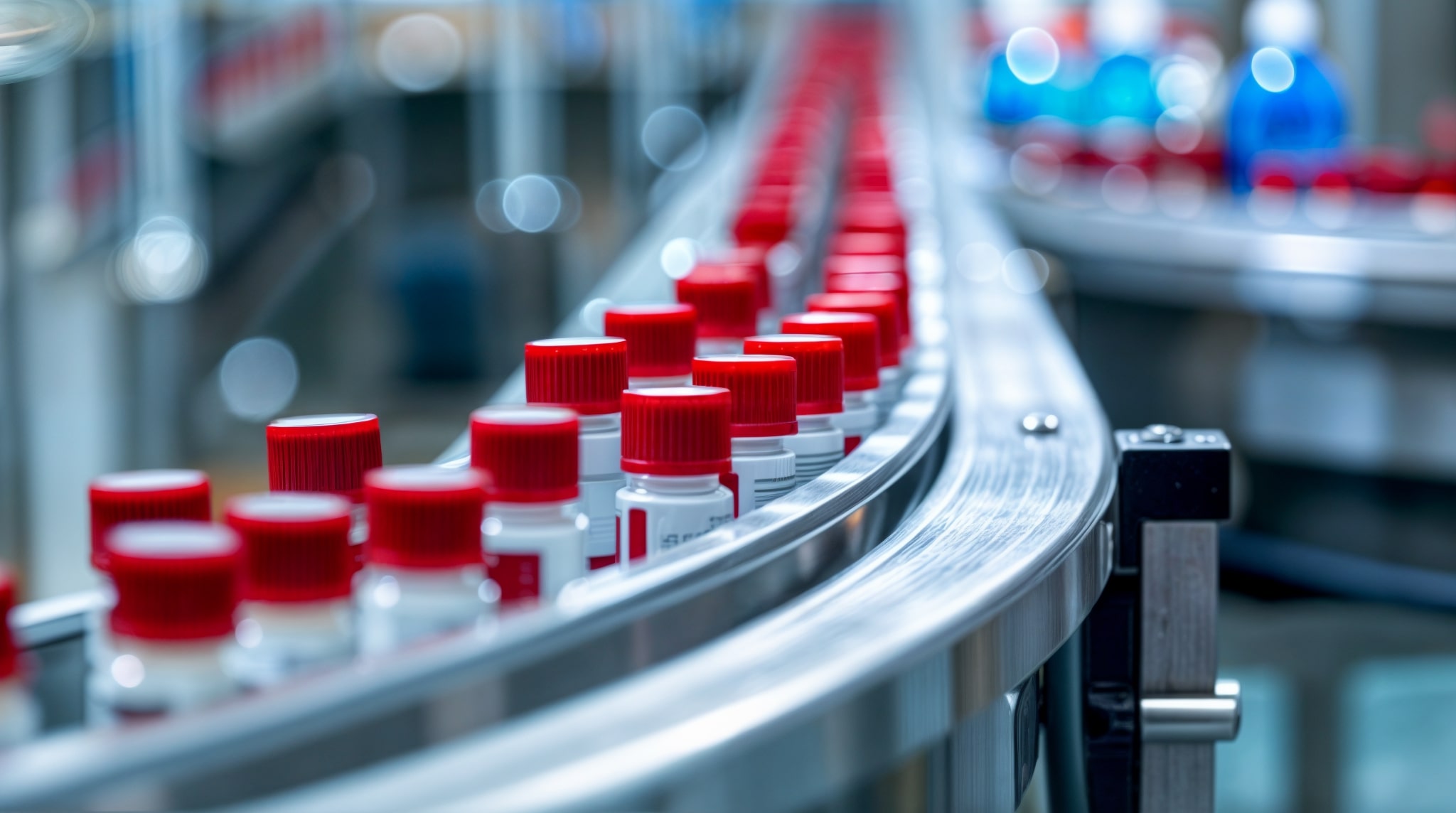
Conveying technology is primarily used in areas that require the transport of materials and products within production environments, warehouses, distribution centers, and packaging areas. It is essential in the automotive industry for assembly lines, in the food and beverage industry for handling raw materials to finished products, in mining for transporting ores, in the pharmaceutical industry for moving ingredients and products, and in e-commerce for sorting and delivering orders. Application areas are diverse and range from heavy industry to sensitive high-tech sectors.
Application
Examples
Production environments
Automotive industry, assembly lines
Warehouses
Distribution centers, e-commerce
Food and beverage industry
Handling of raw materials, packaging
Mining
Transport of ores
Pharmaceutical Industry
Movement of ingredients, products
E-commerce
Sorting, delivery of orders
Who develops innovative conveying technology solutions?
Innovative conveying technology solutions are developed by a variety of companies specialized in mechanical engineering, automation technology, and material flow systems. Leading players include both established industry heavyweights and start-ups offering new technologies and approaches. These companies invest in research and development to create more efficient, flexible, and intelligent conveyor systems. They focus on integrating IoT (Internet of Things), Artificial Intelligence (AI), and robotics to advance automation and meet the requirements of modern production and logistics environments.
Developer
Specialization
Innovation areas
Mechanical engineering companies
Conveying technology, material flow
Efficiency, flexibility
Automation companies
Automation technology
IoT, AI, robotics
Start-ups
New technologies
Innovative solutions, application of new approaches
Research institutions
Basic and applied research
Advancing technological developments
How do pneumatic conveyors differ?
Pneumatic conveyors differ from other conveyor systems primarily in their operating principle, which enables the transport of bulk materials, such as powder or granules, through pipelines using airflow. They can be divided into two main types: pressure and vacuum systems. Pressure systems are suitable for long distances and high capacities, while vacuum systems are ideal for shorter distances and more flexible applications. Pneumatic conveyors offer advantages such as lower space requirements, high hygiene standards, and the ability to safely transport materials over complex routes.
Property
Description
Operating principle
Transport through airflow in pipelines
Main types
Pressure and vacuum systems
Areas of Application
Bulk materials such as powder, granules
Advantages
Low space requirements, high hygiene, safe transport
Distinguishing features
Suitable for various distances and capacities
How much does a conveying technology system cost?
The costs of a conveying technology system can vary greatly and depend on several factors, including the type of conveyor system, the size and complexity of the system, the material to be transported, and specific customer requirements. Simple roller conveyors can be available from a few thousand euros, while complex, fully automated systems with integrated control and software can cost several hundred thousand to millions of euros. Additional cost factors include planning, installation, commissioning, and maintenance. It is advisable to obtain individual quotes to receive an accurate cost estimate.
Factor
Influence on costs
Conveyor system type
Simple vs. complex systems
Size/complexity
Larger/more complex systems are more expensive
Material
Different requirements depending on material
Customer requirements
Specific customizations can increase costs
Additional costs
Planning, installation, commissioning, maintenance
Cost range
A few thousand to several million euros
What trends are shaping the future of conveying technology?
The future of conveying technology is shaped by several key trends. These include increasing automation and integration of robotics to enhance efficiency and precision. Digitalization plays a crucial role through the use of IoT (Internet of Things) and AI (Artificial Intelligence) to develop intelligent and self-optimizing systems. Sustainability is also becoming increasingly important, with a focus on energy-efficient and environmentally friendly solutions. Additionally, individualization drives the need for flexible and adaptable conveyor systems that can quickly adjust to different products and production conditions.
Trend
Influence
Automation
Increase in efficiency and precision
Digitalization
Development of intelligent, self-optimizing systems
Sustainability
Focus on energy efficiency and environmental friendliness
Individualization
Need for flexible and adaptable systems
Integration of robotics
Expansion of automation possibilities
IoT and AI
Enabling networked and intelligent systems
How is safety ensured in conveyor systems?
Safety in conveyor systems is ensured through regular maintenance, safety audits, training for operating personnel, use of protective devices, and compliance with standards and regulations.
What role does conveying technology play in logistics?
Conveying technology plays a crucial role in logistics by providing fast, efficient, and automated transport of goods within warehouse and distribution centers.
How does conveying technology influence production speed?
Conveying technology can significantly increase production speed by ensuring continuous material flow and reducing waiting times and manual handling.
How does conveying technology support sustainability in companies?
Conveying technology supports sustainability in companies by reducing energy consumption, minimizing waste, and optimizing material flows, which increases resource efficiency.
How do global supply chains affect conveying technology?
Global supply chains increase the demand for flexible and efficient conveyor systems to support rapid goods flow and adaptation to changing market needs.
Can conveying technology be used in all industries?
Yes, conveying technology can be used across industries, from heavy industry to food processing, each adapted to specific requirements and products.
What innovations are currently shaping conveying technology?
Current innovations in conveying technology include the use of AI to optimize material flow, energy-efficient drive systems, and modular conveyor systems for customized solutions.
How does digitalization influence conveying technology?
Digitalization enables better networking, monitoring, and control of conveyor systems, leads to more intelligent processes, and increases the overall efficiency of material flow systems.
What should be considered when selecting a conveyor system?
When selecting a conveyor system, factors such as material type, transport distance, speed requirements, flexibility, and costs should be considered to maximize efficiency.